Dark Entries is an independent Belgian music webzine with a focus on dark sounds. The webzine itself is completely in Dutch and can be found at www.darkentries.be. This blog was created with the intention to have an additional online place where our editors can post their English articles.
Pussy Riot is making the headlines again. Maria Alyochina - one of the members of Pussy Riot who was sentenced to two years in a labor camp in 2012 after a subversive performance at the Cathedral of Christ the Savior in Moscow - has fled Russia secretly with her friend. This also means that she can participate in the current tour, which will come to Leuven on May 20 as part of the punk festival Breaking Barriers.
Maria 'Masha' Alyochina currently resides at a secret address in the east of the EU, about which next to nothing is known. The interview is interrupted twice because the police come by, but they are not there for her. One thing is for sure: she does not lead an everyday life at all.
You managed to leave Russia after all. Was it difficult?
I do not have permission to leave Russia and I do not have an international travel pass, but it is important that I have found a legal way. During the last week of April I tried three times to cross the border into Belarus and the third time was finally successful. The second time it went fine but the answer was no. The first time was terrible. The KGB in Belarus was really terrible. I am happy to be in the EU, because now I can rehearse. We are not only preparing the concerts, but also a statement I want to make towards the audience.
Are you looking forward to touring again? What do you hope to get out of this? Do you think you will get a lot of support thanks to those concerts?
I spent two years in prison for the song ‘Punk Prayer: Mother of God Drive Putin Away’ [sometimes translated as ‘Mother Mary, ban Putin’] and now, in 2022, I want this song to be sung as loud as possible. It's not just about us now, it's about the whole world. Clearly a fascist maniac and dictator has his finger on the nuclear button. I live in Russia and I protested there for ten years. My first performance, for which I was sentenced to two years in prison, was at the Cathedral of Christ the Savior in Moscow. After that we took many more actions and I spent weeks and months under all kinds of arrests and in all kinds of prisons. I'm a bit of a pro when it comes to prisons. I want people to know how things are in Russia. We already knew in 2014 that a war was coming and we wanted to make people in Europe aware of this too. Unfortunately, everyone only understood what Putin is like when he started a war in Ukraine. Ukraine is now paying full price for this belated insight. With this tour we also want to support the Ukrainian refugees and Ukraine as much as possible.
There are many Ukrainian refugees in Belgium and the population is being asked to help them. There are a lot of initiatives, but what the whole EU is asking is how we can do something against Putin. Many people feel powerless. What do you think we should do?
No one needs to feel powerless. You have power. Putin and his entire SFB/KGB/Cheka system are spreading hatred and displaying their weapons and their tanks everywhere. They just want people to talk about that. It shouldn't be like that. The basis of European civilization and the EU is the right to live for every person. There is nothing more important than human life. The total opposite of this European civilization is the way Putin and his post-USSR regime treat people. They don't care about people's lives.
Maybe they care about their own lives...
Yes, and that is also why life in Russia now is not just terrible, but three times worse than terrible. The reason is that the regime believes that all people should commit themselves to maintaining the regime. I've had to live in these conditions for 33 years and I know what it's like. Things got worse after the invasion of Ukraine, of course. Journalists and politicians are oppressed. Human rights are suppressed. Only in the deepest clandestinity can someone find something else.
Are there still independent media in Russia? In any case, those media do not reach us.
It's not about real media, but about channels on Telegram, which we can reach with the help of a virtual private network (VPN). Facebook and Instagram are not suitable for protesting the war. One even risks being sentenced to fifteen years in prison if one dares to call it a war.
A few days ago the Western media reported that Putin himself now calls it a war. Before that, it was a ‘special military operation’. Can people still go to jail in Russia for calling it a war, even now that Putin is doing it himself?
Putin can do whatever he wants. By law it is a special operation and not a war. In any case, Putin will not be sent to prison for using certain words.
It seems that many Russians follow Putin because they only get to see his view of things. Is this true or are many Russians just scared? Do many Russians support the regime and believe all the lies?
It is a completely different world, in which one gets to see propaganda 24 hours a day. Everyone knows George Orwell's 1984. Well, in Russia, a person has been sent to prison for holding a poster against fascism. According to the court, it is a crime to own a poster against fascism.
That's strange, because Putin claims that the Ukrainians are all fascists and Nazis. Officially, he's just started this war to wipe them out.
According to a decision of the Russian court, a poster with the caption ‘We are against war’ discredits the Russian army. It's not strange. It's a pure dystopia. You are still a long way from that, but it can happen anywhere. Depriving people of freedom of information in your countries will result in present-day Russia for you too. We are all human. We are not reptiles. It's all about people. With the war raging now, there is of course even more propaganda and censorship, just like in the Third Reich.
Are both regimes similar?
Definitely. In the West, people probably hear that 80 percent of the Russian population supports Putin, but that is nonsense, because no one dares to give his honest opinion openly. You could end up in jail for that. The Russians are only human too and we are not at the point where everyone is saying they are willing to go to jail for ten years. The people who do are real heroes. We will certainly talk about them during our concerts. It is also our role to mention these people, because in the West one hears almost exclusively about Alexei Navalny.
The VRT – the Flemish public television – recently showed a documentary about women in the opposition who are doing their best, but most of them have fled Russia in the meantime. I had the impression that you would never flee from Russia because it is your home.
I am currently in the EU on tour. I should really be in jail. In 2021 I was in prison six times and then we don't count the house arrest. I've found an opportunity to go on tour now and stay out of jail.
Do you think it will be safe? Are you not afraid that they will come looking for you? We've heard a lot in recent years about Russian refugees who were subsequently poisoned by Russian secret agents. Aren't you concerned about this?
This is not the time to be afraid. Just look at Ukraine, where people behave heroically. If they are not afraid, how can I be? The aim of this tour is, of course, to draw attention to the political prisoners. We want to show the people in the West that there are other people in Russia, with a different outlook on life and a different background. They are now in prison.
I have read your book ‘Riot Days’. The two of you were political prisoners, but at some point they separated you because they didn't know how to deal with two political prisoners in the same prison. I suppose there is now more than one political prisoner per prison.
Oh, but we have a lot of prisons, you know. Russia, as in the past, is a big prison.
How many prisons are there really?
I can't count them anymore, but actually they aren't prisons. They are work camps. It is legal slavery. The inmates have to sew and stitch uniforms for the police twelve hours a day. They are paid 3 euros per month for this. It's real slavery. This system has been around for twenty years. We've talked about this before and I think it makes sense to talk about it again. I also want to speak with politicians in the West. I'm an insider who knows what's going on. They do not have a clear picture of what is happening in Russia.
One of the reasons we don't have a clear picture is that European journalists don't find a way to find out what's actually happening? Is there a way for them to gather accurate information?
There is no legal way, but there are a number of channels on Telegram. We know what Lukashenko has done with Belarus. Well, Russia is moving in that direction very quickly. Belarus really is hell, but nobody cares about that. It's like North Korea, but in the middle of Europe.
We care about that situation, but we don't really know what to do about it. Putin still has nuclear weapons and he also controls the gas supply. Gas prices are skyrocketing. The EU would like to ban Russian gas, but has nothing to replace that Russian supply with. Putin could shut down the gas pipelines at any time and European leaders are also concerned about nuclear war. What do you think about this?
If everyone stays scared, the price will always get higher and higher. If the current sanctions had already been taken in January this year, there would be less blood spilled now. It was late then too, but now it's all worse and it could get a lot worse. As for potential sanctions, Navalny's team has drawn up a list of 6,000 names. Navalny has an incredible team fighting corruption like real lions. The EU should use this list.
The bank accounts of many wealthy Russians have already been blocked. They can no longer travel.
Now there are about twenty oligarchs, but there are 6,000 names on the list. That list is really worth it.
Are there any Russians who support Putin and, if so, why are they doing so?
You have seen Donald Trump and his supporters. More or less the same is happening in Russia, but with new imperialist ambitions. The propaganda is doing its job. Officially we are fighting the fascists. They use an old template for this and refer to the victory in the Second World War. We are told 24 hours a day that we are fighting for the cause and against the Nazis. We must not forget that Stalin is Putin's role model. He does not compare himself to Lenin, Brezhnev or Khrushchev. He follows the Stalinist model.
____________________________
On Friday 20 May 2022, Pussy Riot will perform 'Pussy Riot presents: Riot Days' in music center Het Depot in Leuven, a musical and theatrical journey through their arrests, show trials and prison sentences, supplemented with poignant comments on the current situation in a prison of more than 17 million square kilometers.
On Saturday 20 May we will meet again in the Leuven Depot for Breaking Barriers, the annual punk festival. Hägar The Womb will perform there, together with Pussy Riot and Hetze. Hägar The Womb has been around since 1981. In 1987 they gave up, but in 2011 they decided to re-establish the group with only original members. You can read how things went for them in this interview by Breaking Barriers organizer Malcolm Nix.
Hägar the Womb have been around for a while. Who's left of the original line-up and where do the replacements come from? Did you find them through a local temp agency or did they come with their own pedigree in the punk scene?
Hägar the Womb formed in 1981 and split in 1987. When we reformed in 2011 (after getting together to agree the release of a retrospective LP on American label Mississippi Records), we were one of the very few 80s bands who reformed with ALL of their original line-up. We’ve recently lost our guitarist Steph but have welcomed Lorna from London band Rabies Babies in her place. Lorna was down at the front dancing to us in the 80s so she is a great addition. We also have Mike in to drum when original drummer Chris Liberator goes off to dj around the world (his paying job). Ruth, Paul, Mitch and Karen make up the rest of the band now, as they did then. All the boys were in various bands before the Hags – Cold War, Snork Maidens and Flack amongst others. The girls however, had to be encouraged onto the stage. Not one of them had considered performing before but were greatly supported by people who were too drunk to know better.
I won't ask you to explain the band name, but I noticed this is your second time around. The band split in 1987 and then reformed in 2011. Was there a specific reason to split up or did you all just have enough of it for a while?
Thank you for not asking for an explanation of the band name as there isn’t one – which hasn’t stopped that question being asked at every interview (smiley face). We had to make up a name in a hurry because we had been offered a gig and we didn’t have any of the trappings of a band – instruments, songs – and name! I can’t say why that one stuck from the more and more rubbish names that were being suggested, it had no meaning but we have been informed of several over the years as people try and make sense of it – ranging from biblical references to cartoon characters.
We had several little splits before 1987, losing one or two band members each time for various reasons and several new members coming and going until in 1987 Janet and Ruth were the only original band members left. It seemed a good idea to stop completely then.
We're of course very happy you have reformed, but a lot has changed since 1981, the year of the band's official inception. What do you consider the biggest difference for better and for worse?
Thank you for being happy, we are too! What feels different now is playing is so much FUN now; this wasn’t a word much used in the serious UK anarcho-punk circles of the 80s where we were criticised for not wearing black like most bands at the time, and for having light-hearted songs like ‘Dressed to Kill’ as well as those about heavy issues affecting us all. Now we feel much freer being ourselves. I think also that as we are more ‘mature’ now (the band has a collective age of approximately 330). We just don’t care how we come across or if we fuck up - which is often. In fact, we have turned fucking-up into an art-form, the audience have come to expect it!
You have even released some new material, including the very nice 10” 'Hagitate'. Do you think you're able to reach a new audience or are these records mainly bought by old friends? Do you think there are still young people who want to listen to this kind of music?
We’d be pleased if the material we have released is bought by the generation who grew up with us in the 80s but we are even happier that we have reached across generations and young people seem to enjoy us just as much. For girls in the band, it’s gratifying to see so many more girls involved in punk now than there were back then. When we were young girls, there weren’t many women we could hold up as role-models in our anarchopunk scene or the first wave scene that preceded it. We found inspiration in Vi Subversa from the Poison Girls who was older and had a very powerful stage presence; we always said to each other that we wanted to be like her when we grew up. Now we have young girls coming up and telling us the same thing – it’s great to hear that we can shown what is possible, despite the wrinkles.
It's obviously an unavoidable issue. How did the COVID-19 pandemic affect you and your band? We all remember the various lockdowns, which weren't a bad idea in itself, but are there other, more lasting consequences for the music scene?
COVID crept in at a time in the UK where we were already uncertain of what the implications of Brexit would have on us travelling – we’re still not certain. Along with every other band, we had to have an immediate stop in March 2020 when the first restrictions came in. We were so lucky to have just played an amazing 30 year birthday celebration for Kopi squat in Berlin just before that – many bands never played all year and the year that followed. Restrictions have come and gone and the Hags have managed to play a couple of times between them but it’s always felt like gigs could stop again at any time. Now at the start of 2022, we’re hopeful that despite a slow cautious start because of Omicron, we and all the bands we’ve missed seeing can be reunited again.
What I find remarkable is that there are a lot of young people protesting against the destruction of the planet and the lack of policy regarding climate change, but the music they listen to doesn't reflect this. Why do you think there are so few politically motivated young artists these days?
At the risk of sounding like the old people that we are, we have watched the apathy of younger people for decades, thinking: “it wasn’t like that in my day!” It seemed that they didn’t have a protesting bone in their bodies – no one voicing opposition, no one out on the streets or forming movements. From what we’ve seen here in the UK, all that is changing at last! Helped a lot by the recent ‘me too’ and climate change movements – to name just a couple. We only have to look at the line-up of the gigs we play, there are a number of young, switched-on bands who have a LOT to say and do it DIY style just like we did and still do... they may not all sound or look “punk” but they have the attitude and the spirit. It’s so good to see, it gives hope that whatever future we get isn’t achieved through apathy.
Your records were quite successful in the UK Indie charts, but you're still pretty much unknown in large parts of the world. Do you think this is slowly changing? Does the internet provide you with opportunities to familiarize people you've never met with your work?
When we reformed, we thought the internet would open us up to the world but the Hägar the Womb facebook and instagram interactions showed us that – despite being dormant for decades – we had already been opened up. Since reforming and playing abroad, we’ve been constantly surprised that the crowds – young and older - know the words to our songs better than we do! Now we know they will help us out when we forget them. We are happy that now we are more accessible through our online presence, people can talk to us and hear our new or live stuff, not just play the old records. The internet does help us reach out further afield which is great as we are generally rubbish at self-promotion. It was never an aim for us as a DIY band - we had little appetite for (and let’s face it, little chance of) Hag world domination.
On May 20, you're playing at 'Breaking Barriers presents' in Leuven, Belgium. This is your first concert ever in a country that is actually located not far from the shores of Albion. What do you expect from this concert? What do you think will go horribly wrong?
We expect the finest beers and waffles in the world! And of course, that you will all know the words to our songs better than we do. The only country we ever got to in the 80s apart from the UK was Holland. Even now, we’ve never been to Belgium which makes Breaking Barriers festival all the more special for us. It will be a real treat to see and meet see bands from other countries – Breaking Barriers has a truly international flavour as its name and its ethos suggest. Many things could and do go horribly wrong on and off-stage. I (Ruth) try and ‘manage’ the rest of the Hags but it’s like keeping a lid on a box of frogs – pointless! So we could have problems like keeping upright on stage after too many very fine beers or be downed by excess-waffles, or have travel problems – who knows, we’ll just say Fuck It with capital letters and carry on.
Having seen you play a few times in the past, I'm under the impression Hagar the Womb are at their best when not completely sober. How drunk will you be during your first Belgian concert? Can we expect another drinking contest with variously flavoured vodka samples or will you just improvise some verbal abuse aimed at your frequently victimised bass player?
Haha you have done your research well. Well, as already indicated - we may not be “completely sober” when we reach the stage. Mitch is the source of our on-stage flavoured vodka shots. He works for the Finnish church in London and manages to get a nice array of imported fine spirits. The last flavoured vodka he got us was chocolate and mint, very strong stuff although it seemed like something you could give a small child. He poured it into 6 cocktail glasses he’d bought with him – he can sometimes be very civilised! As you have seen, poor Mitch does get some ‘attention’ from Karen on stage – verbally and physically. Sometimes she injures him but she never means to.
Finally, do you think the bureaucracy which is a direct result of the whole Brexit-scam will stop alternative British bands playing in Europe? Isn't there a risk a lot of them will simply think it's not worth it anymore?
Our stupid government seems intent on making it difficult for British bands to play in Europe and for visiting bands to come and play in the UK too after Brexit. Its actions during the pandemic have shown that it doesn’t value culture in most forms, especially live music which has had very little support. Where we are now as a result, is trying to build back what we once had. Despite the pandemic and Brexit uncertainties, we hope that we get to play at home and aboard more regularly this year. See you in May!
Punk is not dead. The Breaking Barriers festival in Leuven - founded in 2016 to celebrate the 40th anniversary of punk - continues to keep its finger on the pulse. They will have a new edition on May 20. We don't need to introduce the main act Pussy Riot the the anarchopunk veterans of Hägar The Womb. Hetze – Dutch for agitation – on the other hand, is still very young. They have been around since 2017, but they already have a great reputation. Malcolm Nix spoke to the ladies (and gentleman).
Hetze is still a quite young band. Did you have any past in other bands before you founded this band?
Not that much. Viktor had the most experience, because he's been playing in various bands for fifteen years. He's also the drummer of Bones, an excellent death metal band worth checking out. Carla had a bit of stage experience and Dorien sometimes played bass in Travolta. For most of us, Hetze was the first real experience with a band.
What drives young people to start a punk band? Didn't your peers tell you it's trendier to make hiphop, dance or sensitive ballads?
No. Actually, we're not that young any more, but thanks for the compliment. We don't know a lot of people who listen to dance or sensitive ballads. We like it hard, harder, hardest, although throughout the years we started to appreciate more genres. A bit of hiphop in the car or dance during an afterparty are definitively options. What genre you play doesn't matter, as long as you do it with conviction. Put your heart in it, because otherwise it will remain hollow. The cool thing is we get to see bands who don't fit our genre, but who we appreciate because they perform well. Being blown away by a band, no matter what the genre is, is the most beautiful thing there is.
Hetze is a way of showing our discontent with various societal issues. Screaming at the top of your lungs and producing noise are the best ventilation valve in a world that looks increasingly indifferent. There's no age limit on punk. We know people bordering on 60 who still manifest the punk spirit with conviction on stage.
The punk scene has been around for a few decades now. To which extent do you consider yourselves the heirs of a tradition? Which older bands have influenced you the most?
It's brilliant that a lot of young bands make very good music. We do our best to keep up with new music and not just listen to the classics. The radioshow Wangedrag is a good tip for those who want to be up-to-date.
Just like other bands, we try to do our own thing, but in the contemporary music scene it's all about certain nuances or influences that differ from the rest. In our case, it's a mix of traditional hardcore, powerviolence and, because of Viktor's background, an death metal edge in the drums.
If we have to drop some names, bands like Health Hazard, Disrupt, Despise You, Spazz, Seein' Red and Dropdead have been a big inspiration.
I wouldn't dare to claim you're motivated by financial gains, but a bit of recognition is always nice. Does the racket you produce get some positive response from young and/or older music lovers?
Money and recognition are definitely not the same. Getting recognition is a nice thing. In this regard, Hetze is a bit spoilt. In a short period of time, we've become a stalwart of the punk scene in and around Belgium. Our shows and our records are doing better than we had dared to hope in advance, leaving us feeling absolutely blessed. The fact we're invited to perform during the Obscene Extreme festival, for instance, is just crazy. The best response we can get is a wild moshpit and everybody in the crowd going bonkers.
The previous question obviously referred to the era before the pandemic overturned all our lives. How did you survive this period without live concerts? Do you have any tips for musicians to hang on to their motivation, so they won't lose the joy playing music brings them in times like these?
In the beginning, this forced time-out was a bit of fun, but by now it has become almost impossible to maintain. We really miss the contact with people and the energy of live shows. We released a split EP with Trappist. We didn't wait for the pandemic to end to release new music. Because there weren't any live shows, people wanted to support the bands and bought their music. This motivated us to keep going. We're currently writing songs for a new full album.
During the first lockdown, when we weren't allowed to rehearse together, we had some fun making Hetze mouthmasks and selling them for a worthy cause. We are blessed with an extremely creative singer, who also knows how to sow and to tinker. Each member of the band also recorded some footage, which we turned into a promo video. That way we weren't just being idle and it also gave us an opportunity to promote our new split EP, which was released right before the lockdown.
This might be a tip. Where does your band want to stand for? It doesn't necessarily always have to be music.
In spite of all the positive experiences, something's bound to go wrong sometimes. What's the worst or the most depressing you've experienced on the road so far? Which lessons can we learn from it?
For now, we've been mostly blessed. Something that could have been depressing, was the fact that a member of the opening band had died shortly before our concert in Trier. The audience then listened to their album and the whole night was dedicated to this person. All that support and the community feeling, that's the beauty of punk. By the way: RIP Tommy.
In May 2022, you'll be playing live at Het Depot in Leuven, Belgium, with Pussy Riot, an ensemble whose criminal records are longer than their discography. The reason is, of course, that they live under a dictator who oppresses all forms of dissent. To which extent are you actively involved in protest?
It's horrible what Pussy Riot has been put through. You can find us at protest rallies regularly, but we don't go to every possible demonstration. If something really affects us, we'll be there. We all work with homeless people on a daily basis and we try to be actively involved in their struggle. As social workers, we try to defend their interests on the local level. That way, we try to generate some changes for the most vulnerable members of society. We've noticed the struggles at the bottom are getting harder and harder. An increasingly rightwing policy produces more and more exclusion and poverty.
With Hetze, we try to participate regularly in fundraising activities. That way, we try to draw attention to various projects and try to draw attention to specific issues. In our opinion, protest also means standing up and opening your mouth if you're a witness of discrimination or injustice, ensuring the victim feels supported instead of isolated.
These days, most demonstrations are organized by shady rightwing extremists, trying to use a general feeling of discontent to recruit new members.
What do you consider the biggest threat to society, if we can still use that word?
Intolerance and social media. All too many people just believe everything they read on social media platforms. The rightwing knows how to use this very well. They operate very cunningly, and a lot of their views have become mainstream throughout the years. They create fear and polarize, which is quite frightening. Apathy kills! Our shortest song summarizes it all in just 7 seconds.
On the other hand, we still want to believe most people are decent. We see a lot of groups who try to connect people, civil movements defending solidarity, small-scale actions by ordinary people who organize themselves, etc. We also see lots of young people who organize themselves and organize actions related to climate, LGBTQ-rights, women's rights, etc. Maybe we should have a little faith in the coming generation.
It's never easy for a Belgian band to build up an international reputation. Our country is mostly known because of its beer. Ironically, your split EP with a Californian band with the unlikely name Trappist demonstrates this perfectly. Is there any interest for your music in other countries or do most of your concerts still boil down to a trip through the ten provinces of Belgium?
We played with Trappist in Het Bos in Antwerp. It's amazing that Trappist, featuring members of Spazz and Despise You wanted to release a split EP with us. The previous Split LP, with the German band Dismal Fucker, was the result of a legendary night at JH Sojo in Leuven, where we first met them. This led to a strong friendship and the decision regarding a split release came shortly afterwards.
Next year, we'll be playing several concerts in Germany, The Netherlands, the UK and the Czech Republic. A tour of Germany and the UK are being planned now.
That's the beauty of the DIY-scene. It's a small, but international scene and people across all borders try to help each other by organizing gigs, offering places to sleep and share contact details. Each one of us, has at one time offered a band to sleep at his or her house, organized a concert or cooked dinner for other bands.
Do you have any tips or suggestions for starting bands who are keen to produce punk or other extreme sounds without any commercial potential? Which errors should they definitely avoid?
Go to a lot of concerts, have fun and support other bands. That way, you'll get to know a lot of new people, which will get a lot of things started.
On February 1, 2021 - exactly one year ago - the army in Myanmar took the power. The 2020 election results, in which the National League for Democracy of Nobel Prize winner and democracy icon Aung San Suu Kyi again obtained an absolute majority, were wiped out. Since then, there have been violent protests and the civil war has flared up again in the country.
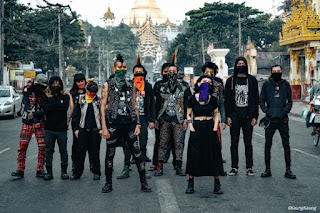
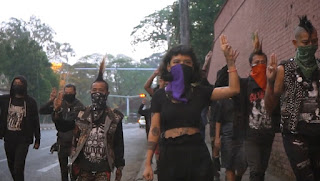
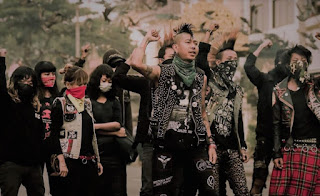
Myanmar also has a committed punk community. The Rebel Riot is one of the most important bands and is at the forefront of the fight against the coup. We had a conversation with singer Kyaw Kyaw.
On the first of February, it was one year ago that the military coup took place. Back then, the military promised to hand over the power to a civilian government after one year, but of course I don’t think this will happen. What do you think will happen?
I think things are well out of hand for them. The revolutionary movement is too strong. After the English colonisation, in 1948, we gained independence. In 1962 the military took the power. In 1988, we had a big revolution, but the military took the power again. After the coup in 2021, things are totally different than in the past. After one year, people are still fighting, and they keep on fighting. The military didn’t manage well. They didn’t get what they want. People fight back in many different ways. People are still protesting, keeping up the Civil Disobedience Movement (CDM), they are fighting with the armed force and so on. Artists and politicians are still showing solidarity with the protest movement. In the past, the military could control any protests after two or three months. This time, they don’t control the land. After one year, the people’s revolutionary mind and spirit are still big.
So you don’t think the military will make any concessions to the people at this point?
No, I don’t think so.
On the first of February last year, you heard about the coup. Was it a surprise for you or not?
I was surprised, but I had also thought before that they would take the power. I was informed, but when I heard they took the power for real, it was a surprise and shock. But that drove us to do something against that coup.
What was your first reaction when you heard about the coup?
I walked around my township and checked about how people felt. A lot of people were chocked and sad. I felt sad too. I didn’t know what to do in the future, with this military system. I was also very sad for the young people and the next generation. These were my first feelings after the coup.
You were one of the first to go out on the street to protest the coup, which started a few days after the coup. How did that go?
It started on February 5. I’m not an organiser. I just wanted to show my solidarity with other people. I got a message that we should demonstrate at 4 pm in this specific area. I went to support this crew, but the organiser didn’t come. We didn’t know what to do. The media were also waiting. Many other people were there. We were confused. Should we start on our own or just leave? 4:30, nothing happened; 4:45, still nothing. When we left, my friend started showing three fingers on the street (the three finger salute was inspired by the movie ‘The Hunger Game’ and became the symbol of the protests, xk), and then everybody started showing three fingers. The media noticed it. We didn’t talk, we didn’t pull the banner, we just showed the three-finger salute and walked on. A lot of people were happy and were clapping for us. They were applauding from their flats and from the busses.
The media took pictures and made videos. I was so shocked and scared. I didn’t know what to do. A cameraman from the media told me: ‘Kyaw Kyaw, you should leave now.’ I tried to leave. I tried to take a taxi, but the taxi drivers were very scared. They didn’t want to take us because they didn’t want trouble with the police. It was difficult to take a taxi, so we went to another area and took a taxi there, and then went to meet our friends. After this, I deleted my facebook account and I hid myself.
You had to hide? So, you cannot walk freely in Yangon?
If they recognised me or other people in the newspaper, they would arrest us for sure. But we were lucky, because after we went to demonstrate … the next day, a lot of people were on the streets. So, our demonstration disappeared. On February sixth, a lot of people were showing solidarity against the coup. That was good luck. Otherwise, I would have been arrested.
One month after the military coup, you released the video for ‘One Day’. It was a song that you were already working on before the coup. It was a great video, with also the three fingers salute that you just mentioned. What was the impact of that video?
This song was already made before the coup. We imagined … One Day … a future without any discrimination, we don’t want any oppression, we don’t want any military, no corruption, no wars … Because our country has known so many civil wars. We have the longest civil war in the world! We have a lot of discrimination between islam and buddhism, and we have had a military system for so long. From 2010 to 2020, we had so-called ‘democracy’, but people didn’t really have human rights or were not free to speak. In the parliament, the military power was still there. They controlled it from behind the screens.
We wrote this song six months before the coup. But after the coup, we thought it was the right time to release it. We wanted to do it like many political bands like Pennywise, Rage Against The Machine or System Of A Down. They influenced me a lot. We wanted to shoot a video during the protests. But it’s scarier here because they shoot with real bullets. Protests here are different than in other countries. In other countries, the police might beat you and arrest you. But here, they shoot with real bullets.
We were scared, but we had to do it. Everybody was aware of the danger. We asked everyone: ‘does it feel good to participate? If you don’t feel safe, you don’t have to be part of this. If you agree, we will do it together.’ That’s the way we made the music video for ‘One Day’.
The release of the CD ‘One Day’ was delayed because people were afraid to work with you. The printers didn’t want to work on it. What happened?
It was very difficult. We knew that it was risky when we released it. It’s like walking on a string. I think: ‘they do their job, we do our job’. They took the power and try to manage it, and we wanted to release this CD. It’s not just music, it is showing our attitude. They try to show how they control us, and we want to show that we are free. They’re trying to push us down, and we are trying to stand up. That’s how we relate to this idea.
That’s why I wanted to release it, especially during the coup. It is very dangerous, because we sell merchandising and so on … and they don’t want any artists against the coup. I wanted to do a DIY-release, but because of the colours, I could not make a DIY-print. So, we had to go to a printing shop. But every shop said no. They didn’t want to do it because it was political stuff. They were afraid their business would be shut down. But one of my friends who is also a political activist said that he knew one shop who would do it. So that’s how we succeeded in printing it.
But as we keep on doing what we do and keep on fighting, we get less attention than other political leaders and activists. We are punks, we are underground … so we are not so influent to their big society. We influence mainly young people, alternative people, and some political activists. We are not as influential as people like Aung San Suu Kyi. That’s why we stay under the radar.
Is the military aware of the CD with harsh critic of the coup? Does it have any impact for them?
I don’t know. They focus on other protests, political leaders, activists, and they might forget people like us. They are more focussed on others that are maybe more dangerous and more important for them. But we are on their list for sure, I think.
You sing about the protests in ‘The Night Will Not Be Silenced’. At first, the protests were peaceful, as you sing in the song. It was civil disobedience, banging on pans and pots. But there has been an evolution towards a civil war. There has always been a civil war since the independence of Myanmar in 1948, but it has broken out in a much harder way. How was that evolution between peaceful protest and armed protest?
95% of the population hate the military. We have been in a military system for so long. A lot of families have people missing or killed. So, people deeply resent the military. When the military took the power again, this anger was coming back. But we never start the violence. The peaceful protests were right. But the military shot at us, in the head, in the body … So, the anger exploded and people wanted to fight back. Some people don’t believe in peaceful protest anymore. Because even if we stay peaceful, they will never stay peaceful … That’s why a lot of young people, teenage people, a lot of my friends, people whose family or friends died … choose the armed resistance.
They think the Civil Disobedience Movement is not fit anymore. Because the military arrests new people every night. People are not safe. They think the city is not safe anymore. That’s why they choose to go and join the armed resistance. A lot of people are joining the People’s Defence Force (PDF, an armed movement that is active since MAY 2021, xk) and do fight the military with weapons.
The PDF is a new force, but there are also the armies of the ethnic minorities. You sing about them in the song ‘Destruction of Humanity’ …
The ‘Destruction of Humanity’-song is about how the military attacks minorities, burning their houses or villages. We are criticising this.
In a way, you already answered my question. A lot of young people are leaving the city to fight with rebel groups, also ethnic rebel groups or the People’s Defence Force. Is this a big movement?
Yes, it is a big movement. In the past, the Burmese army attacked the Shan people, the Kachin people… Then the Shan and Kachin people fought back. But with the PDF, the Burmese people are attacking the Burmese army. There are now two Burmese armies fighting each other.
And I have heard that the official army – the Tadmadaw – are afraid to leave their barracks. They are attacked at multiple fronts. Is that right?
Yes. They are very afraid right now. They have too many enemies at one time, because the PDF and other groups are all fighting them at the same time. So many people are dying right now. That’s why they are afraid.
Another song on the album is ‘Genocide’. I think this is about the ethnic cleansing of the Rohingya minority in 2016-2017. You said already that muslims are still persecuted. How is the situation with them now?
When we wrote the ‘Genocide’-song in 2018, some people agreed that this was a genocide, but other people disagreed. The government, the NLD (National League for Democracy, the party that was in power between 2015 and 2021, xk), the Tatmadaw … they don’t want to hear about a genocide. They tell us that there was no genocide. That’s why we made a song that was called ‘Genocide’, to stress that it was an actual genocide. We don’t use the word ‘Rohingya’, but we wanted to stress that a lot of people in the Rakhine state were fleeing their houses and dying. Everybody knows that we mean the Rohingya people, right.
Another song is ‘Food Not Bombs’. We are aware of your Food Not Bombs-project in which you distribute food to people in need in Yangon. I’ve understood from your facebook that you also have a Food Not Bombs programme directed to the Rohingya people. Is that correct?
Yes. But we are not in the refugee camps in Bangladesh. Some Rohingya people are still in the Rakhine state (the part of Myanmar where the Rohingya live, xk). We are supporting the Rohingya people who stayed in the Rakhine state.
Yes, but you live in Yangon. The Rakhine state is far away. So, the Food Not Bombs-project must be a big organisation…
No, it is not a big organisation. We have a lot of influence on young people. They like Rebel Riot, and it’s not only about the music. They like our way of thinking, our way of living, they like our ideas … Some fans of Rebel Riot who live in Rakhine state wanted to start a Food Not Bombs-chapter in their own state. Because if you want to support our band, you should not buy the CD or merchandising, but you should just show it through your attitude. That’s how the chapter in Rakhine state started. We don’t need to go there. We can meet with a zoom meeting and share our ideas and brainstorm. We are not only active in Rakhine state. We have chapters in Dawei, Mandalay, Mon state, Bago… Sometimes I go and join, but normally I live in the city. We are now also starting a new chapter in Kachin state. I don’t need to go. I just meet with people on internet and share my ideas.
Let’s go back to the start of Rebel Riot. You started the band after the Saffron Revolution in 2007. You already said that it was very different from now, but the Saffron Revolution was also a big revolution against the military. What differences do you see between now and then?
Back then, the buddhist monks were starting the revolution. We are a traditional buddhist country, so everybody though: ‘they can arrest everybody, but not the monks’. People didn’t expect the military to turn on the monks. Usually, the people are afraid of the military, but now they thought that they were many and the monks supported them. They thought the military could not kill or arrest a monk. They have to respect the monks. But they did not. They shot and killed many people. So, people were very scared. A lot of people died. That made me think and I started making music after that.
What was different is: we didn’t have internet. Well … some people had, like the rich and the government people. But normal people didn’t have much information. We could not communicate. The Saffron Revolution mainly took place in Yangon. The news didn’t go out to the rest of the country. This current revolution doesn’t only take place in Yangon. The whole country is involved.
But especially the information technology is different. Everybody has a phone. We know what happened somewhere after five minutes. This helps us in our fight. The people have more knowledge. They understand what the military is doing. They have a lot of information, and the information goes very fast. This is very different than in 2007. They could shut down everything after only one week back then. But now, we have been protesting for one year and it is still going on. We keep on sharing information. Everybody is awake right now. We are less scared and better educated than before.
We also remember that the Saffron Revolution was leaded by monks. What role do the monks play in the current situation? I think some of them support the Tadmadaw and others not.
Some monks are puppets of the military, as is MaBaTha (a radical right-wing organisation of buddhist monks, xk). They are supporters of the military. They are not talking about buddhism. They are rather spreading nationalist propaganda: ‘we have to fight for our religion, we have to fight for our people’ … They try to brainwash the people. But in these times, many people know their real face. They are not that successful with wat they are doing. But this type of monk had nothing to do with the Saffron Revolution.
We have three types of monks in Myanmar. The first type is apolitical. They are not interested in any politics. They just want to do the meditation, reach inner peace, and spread the buddhist religion. The second type is the pro-democracy monk. These are the monks you saw in the Saffron Revolution. They support the NLD, they support democracy and human rights. They believe that they cannot be in peace if the people do not live in peace. They get food from the people, so they believe they must stand up for the people too. The third type of monk is the pro-military monk. They spread propaganda about how important the army is: ‘In this country, we cannot survive without the military’. They don’t trust Aung San Suu Kyi because she is married with an Englishman. She could bring in English and western influences, so the Burmese people will lose their identity. They think that Aung San Suu Kyi is pro-muslim and will help the muslim community to get bigger. They want to defend their religion and identity. The pro-military monk is represented by MaBaTha.
Sometimes Aung San Suu Kyi is also called a Burmese or Bamar nationalist (the Bamar are the main ethnic group in Myanmar, xk) because she defended the army about the ethnic cleansing of the Rohingya. She even went to The Hague to tell the World Court what happened was just an ordinary armed conflict, not a genocide. Some also say that she didn’t fully support the peace process with the different ethnic armies, which started in 2015, too. Is this true?
You know, most of the people who fight for democracy love Aung San Suu Kyi a lot. Since 1988, Aung San Suu Kyi is the icon of freedom and peace. Some people would even die for her. She has a lot of support. After 2010, we were on the way to democracy, and she was released from house arrest. She had massive support, also from ethnic minorities and from alternative people. They too see her as our mother. After 2015, when she won the elections, the Myanmar people put their hope in her. She was a top politician that had the power, you know.
But she didn’t stand for the students, or for other ethnic groups. She was also very close to the military. She didn’t show enough strength. She only took decisions on things that are not so important. For the people of the big cities, it was a big change. The tourists were coming in, it was good business. Human rights got a lot of attention. The people in the cities love Aung San Suu Kyi a lot. But for the minority people, the civil war continued, the human rights abuses continued, a lot of violence is still happening … She doesn’t speak about them. They don’t hate Aung San Suu Kyi, but they wonder why the mother doesn’t do more for them. They are angry, but still with love for her.
But Aung San Suu Kyi had less power than people believe. People are saying that she did wrong, that she should have created her own army before the coup … They are angry because she didn’t prepare anything. Now, people wish that after the coup and after the revolution, she would retreat from politics.
Let’s go back to the music. I like the way you mix the Burmese language with English in your songs. Why do you do that? You speak Burmese, but you also fit in some words in English in many songs.
It’s our style since we created the band. As we write our music, the choruses are mainly English while the verses are in the Burmese language. We tried to translate it in Burmese, but it didn’t work well. Our English is not so difficult. We use a type of English that everybody understands. We also have international people who support us, and they like it. But I cannot write a full song in English. I’m very bad at singing in English. But even if people don’t understand the whole song, they understand the chorus. The Burmese language is more difficult to translate and more difficult to shout.
I have just one final question. You’re in a struggle with the military, there’s a civil war going on, there is still a civil disobedience movement going on … Do you think the people can win this struggle? Can the people defeat the military?
I don’t know what will happen. I’m not a politician. But I strongly believe that if we fight every day, we must win for sure. Also, we are already winning. People keep fighting and are believing in it. And the military, the Tatmadaw, are scared. Even if they have guns, they still fear us. So, we have already won. We’re doing what we believe in every day. They are doing what they’re fearing every day. We have a lot of artists defying the military. I cannot predict the future, but if we keep doing what we believe in, we will win one day.
Is there anything else you want to say?
It’s not only Myanmar that faces problems. There are problems in every country. But our problems are bigger. People are getting killed. This military must disappear. That is our duty. Don’t look only at Myanmar. We are just a small part of the world. Don’t fight only for Myanmar, but for all people everywhere. We know no nations, no borders. We are one world. If we succeed in our struggle, we will also fight for your part of the world one day. All human people must show solidarity.
Punk hatte schon immer Freude daran, gegen
schmerzende Schienbeine zu treten. Das konnte schwerwiegende Konsequenzen
haben. Im kapitalistischen Westen - wo Punk entstand - aber mehr noch im
kommunistischen Osten, wo freie Meinungsäußerung sehr relativ war. Wutanfall
war eine der ersten Punkbands in der DDR. Sie erlebten viele große Momente,
aber auch die Härte der Stasi-Repression. Fast 35 Jahre nach ihrer Auflösung
erscheint zum ersten Mal eine LP von Wutanfall. Wir hatten ein faszinierendes
Gespräch mit Schrammel, dem Herausgeber des Albums.
Wutanfall
war in Leipzig als erste Punkband bekannt. Sie erschienen 1981. Was war der
Einfluss der Band?
Wutanfall rekrutierte sich aus den ersten
Punks in Leipzig. Die Szene bestand damals aus einer kleinen Gruppe, die
sich aus allen Stadtteilen der Stadt gesucht und gefunden hatte. Wutanfall
wurde schnell das Flaggschiff, um die sich die Szene sammelte. Der Mittelpunkt
sozusagen. Schnell wurde Wutanfall über die Grenzen der Stadt hinaus bekannt.
Sie spielten gemeinsam mit anderen Gruppen der ersten Generation DDR Punks in
Erfurt, Jena, Halle und Berlin. Durch ihre Geschwindigkeit und Energie auf der
Bühne galten sie als die „schnellste und beliebteste“ Punkband der DDR. Die
Auftritte waren legendär und jeder kannte Wutanfall. Bald war Leipzig die Stadt
mit der zweithöchsten Punkanhängerzahl in der Republik. Bis heute erinnern sich
viele an Wutanfall, kennen Geschichten der Band. Der damalige Einfluss zeigt
sich daran, dass bis heute kaum Literatur über DDR Punk veröffentlicht wurde,
wo die Band nicht explizit erwähnt wird.
Obwohl
Wutanfall bis heute legendär ist, ist es das erste Mal, dass eine LP mit ihrer
Arbeit zusammengestellt wird. War es schwierig gute Aufnahmen für die LP zu
finden?
Gute Aufnahmen von DDR Punk Bands zu finden
ist immer schwierig. Da die Gruppen ja illegal existierten, gab es keine
Möglichkeit offiziell in Studios zu gehen, um dort professionell aufzunehmen.
Gute Aufnahmetechnik, sogar ein gutes Mikrophon zu bekommen war ein Glückstreffer.
So blieb meist nur der Kassettenrecorder oder ein Tonband mit Raummikro um die
Musik im Proberaum aufzunehmen. Wutanfall hatten das Glück über ein gutes
Westmikro zu verfügen, welches bei einem Puhdys (DDR Rock Band Nr.1) Konzert in
Leipzig geklaut wurde. Dadurch ist auf den Wutanfall Aufnahmen der Gesang recht
gut verständlich. Das Problem war aber: überhaupt wieder Aufnahmen zu finden.
Die Band selbst hatte nur noch ein einziges Tape. Erst über die alten
Verbindungen zu Freunden der Band fand sich wieder mehr Material zusammen. Da
hatte einer noch ein Tonband und dort gab es noch einen Livemitschnitt. Die
Wutanfaller selbst haben sich darüber sehr gefreut und gestaunt was die Zeiten
überdauert hat. Die Sachen sind immerhin 38 Jahre alt und viele Songs waren bereits
in Vergessenheit geraten.
Wutanfall
war am Anfang nicht solch eine politische Band. Es war eher der Kontext, der es
politisch machte. 1983 wurde die Stasi angewiesen, hart gegen Punks zu sein.
Warum?
Die Punks der ersten Generation waren anfangs
nicht politisch oder gar staatsfeindlich eingestellt. Punk war eine Jugendbewegung
von Leuten, die Spaß an der Musik und am Aussehen hatten. Was von staatlicher
Seite vorgegeben wurde, reichte ihnen nicht aus. Sie testeten ihre Grenzen.
Schnell war in der DDR genau dies das Politikum. Ihr Aussehen passte nicht in
den real existierenden Sozialismus. Was diese jungen Typen da machten, konnte
nicht harmlos sein. Darüber war sich der Staatsapparat schnell einig. Es passte
nicht ins sozialistische Weltbild des positiven Fortschritts und musste daher
weg.
Trotz der - anfänglich nicht vorrangig - staatsfeindlichen
Texte der Bands waren diese doch ein Politikum. Sie prangerten offen die
Widersprüche in der DDR an und benannten diese klar. Dies machten die übrigen Musikgruppen
der DDR höchstens verschleiert und sehr vorsichtig. Bei den Punkbands wurde nun
offen der Verfall der Städte, die Doppelmoral in der DDR, die Sinnlosigkeit der
Planstellen oder die vergiftete Umwelt besungen. Das war einfach viel zu offen
für DDR-Verhältnisse. Bis 1983 war die Szene ständig gewachsen und nicht wenige
Punks hatten bereits negative Kontakte mit der Polizei, der Staatssicherheit
und auch dem normalen Bürger, auf Arbeit und in der Schule gemacht. Die Texte verschärften
sich zusehends und die Punks waren zudem aus dem städtischen Bild nicht mehr zu
vertreiben. So erging von Minister Mielke, dem obersten Chef des Ministeriums
für Staatssicherheit, der Befehl „Härte gegen Punk“ zu zeigen und „die Samthandschuhe
auszuziehen“, also eine Endlösung herbeizuführen und die Punkszene zu
vernichten. Dies wurde umgesetzt indem angeblich führende Köpfe der Szene
kriminalisiert und verhaftet wurden, andere aus der DDR ausgewiesen wurden oder
zur Armee eingezogen wurden. Andere wurden psychisch so unter Druck gesetzt,
dass sie sich von der Punkszene distanzierten. Manche bekamen den PM12, einen
Ersatzausweis, der unter anderem das Reisen in sozialistische Bruderländer
unmöglich machte und der Polizei die Möglichkeit gab den Besitzer dieses
Ausweises grundlos für 24 Stunden inhaftieren zu können. All diese Maßnahmen
schienen am Anfang von Erfolg gekrönt zu sein. Die Szene war 1984 tatsächlich
ausgedünnt. Es hatte aber eben auch die Wirkung, dass die, die diese
Repressionen über sich ergehen lassen mussten, nun sehr genau wussten, was sie
von diesem Staat zu halten hatten. Sie radikalisierten sich. Die DDR hat sich
ihre Staatsfeinde selbst gemacht. Denn genau das waren die Punks nun.
Die
Stasi hatte sogar ein spezielles Programm für die Auflösung von Wutanfalls: OPK
Stern. Es scheint, dass Sänger Chaos ein besonderes Ziel dieses Programms war.
Mit welchen Methoden hat die Stasi Menschen wie Chaos eingeschüchtert?
Chaos war der Sänger von Wutanfall. Wutanfall
war ja aus Sicht der Stasi der Kern des Übels in Leipzig. Sie gingen davon aus,
dass es einen Anführer geben muss. Und bei einer Band muss der Anführer der
Sänger sein. So hat sich die Stasi auf Chaos besonders eingeschossen. Das Ziel
der OPK „Stern“ war es, die Band zu zersetzen und zu vernichten. Wie dieses Ziel
erreicht werden soll, ist eindeutig in der OPK „Stern“ benannt: Den Sänger
psychisch unter Druck setzen, um damit die Band zu verunsichern. Dies bedeutete
in der Realität, dass Chaos teilweise mehrfach in der Woche zum Verhör abgeholt
wurde, Verbote wie Innenstadtverbot erhielt oder an Festtagen wie dem 1. Mai
Hausarrest bekam. Er wurde nachts von der Polizei unter fadenscheinigen Gründen
aus dem Bett geholt und drangsaliert. Körperliche Gewalt kam ebenfalls hinzu.
Chaos erzählt beispielsweise von einer Fahrt in den Wald, wo er von mehreren
Leuten der Staatssicherheit mit einem Sack über dem Kopf bewusstlos geprügelt
wurde. All dies diente der totalen Einschüchterung. Es ist heute kaum
vorstellbar, aber es gab keine Möglichkeit diese Dinge irgendwie anzuprangern
oder eine Anzeige zu erstatten. Die Punks in einem Alter von höchstens 19
Jahren waren den Staatsrepressionen komplett ausgeliefert. Und genau dieses
Gefühl des „komplett ausgeliefert seins“ wollte die Staatssicherheit erreichen.
Die
Stasi suchte auch nach Inoffiziellen Mitarbeitern - IM - in der Punkszene. Sie
konnten zwei Musiker von Wutanfall rekrutieren. Wie konnten sie diese Leute
davon überzeugen, an ihrem Programm teilzunehmen und was wollten sie von ihnen?
Der Einsatz von Spitzeln diente dazu, die
Szene zu unterwandern, Informationen zu beschaffen, beispielsweise wann und wo
illegale Konzerte stattfinden sollen und die Punks von innen zu zersetzen. Das
war eine gängige Methode, die auch bei anderen oppositionellen Gruppierungen
genutzt wurde.
Die Gründe für die Mitarbeit sind von Fall zu
Fall unterschiedlich und müssen tatsächlich differenziert betrachtet werden. Es
gibt Fälle, bei denen klare Erpressung Grund für die Mitarbeit ist („entweder du
arbeitest für uns oder du gehst in den Knast“). Es gibt aber auch Fälle, bei
denen Geld und Abenteuerlust der Grund sind. Manche haben versucht, mit der
Stasi zu spielen und nur irrelevante Dinge weiterzugeben. Das war natürlich
eine Fehleinschätzung, denn auch die kleinste Information wurde in dem riesigen
Apparat „Staatssicherheit“ weiterverarbeitet und zusammengepuzzelt.
Im Umfeld von Wutanfall gibt es einige IM die
über die Band berichteten. Die beiden Bandmitglieder sind natürlich besonders problematisch.
Im Falle von IM „Schwarz“dem zeitweiligen
Gitarristen der Band war Abenteuerlust und finanzielle Stimulierung der Grund
für die Zusammenarbeit. Er galt als Hehler, hatte keine Lust. arbeiten zu gehen
(in der DDR galt Arbeitspflicht) und war daher in permanenter Geldnot. Er hat
seine Mitarbeit dazu genutzt, Leute, die ihm im Wege waren, ans Messer zu
liefern. Nachweislich ist er dafür verantwortlich, dass mehrere Leute durch
seinen Verrat hohe Haftstrafen absitzen mussten. Er galt bis zu seiner Enttarnung
durch die Akteneinsicht von Stracke, Anfang der Neunziger Jahre, als eine Art „Szeneguru“
in Leipzig.
IM „Käptn“ der Bassist der Band erhoffte sich
eine Wohnzuweisung durch seine Mitarbeit. Er wohnte illegal in einem zum Abriss
freigegebenen Haus. Wohnungen wurden ja in der DDR zugeteilt. Als Punk,
unverheiratet und ohne Kinder gab es kaum die Möglichkeit, Wohnraum legal zu
bekommen. „Käptn“ ist ein klarer „Angst-IM“. Also er versucht sich selbst aus
der Schussbahn zu bekommen, ohne die Konsequenzen für ein „Nein“-Sagen
abzukriegen, aber auch, die Band nicht aufgeben zu müssen. Seine Aufgabe
bestand darin, Auftritte der Band zu verhindern, die Band in ruhigem Fahrwasser
zu halten und über Bewegungen in der Gruppe zu berichten. Er behauptet, nur mit
der Stasi zusammengearbeitet zu haben, um sie auf falsche Fährten zu locken.
Aus den Akten geht hervor, dass er tatsächlich immer wieder laviert und sich
windet.
Trotzdem bleibt in beiden Fällen der Verrat
von Freunden. Egal wie intensiv und aus welchen Gründen die Zusammenarbeit mit
der Stasi tatsächlich war. Das ist das Tragische. Trotz der beiden IM war
Wutanfall nie eine von der Stasi gelenkte Band. Die Gruppe war immer, zu jeder
Zeit, eigenständig.
Als die
Berliner Band "Namenslos" - vielleicht die radikalste
Anti-System-Band der DDR - inhaftiert wurde, zeigten sich Punks in Leipzig
solidarisch und wurden ebenfalls eingesperrt. Kannst du uns mehr darüber
erzählen?
Namenlos hatten garantiert die
systemkritischsten Texte der damaligen DDR Punk Szene. Das war ganz klar staatsfeindlich.
Aus heutiger Sicht ein extrem mutiges Konzept, aber eben auch ein
Suizidkommando. Die Band wurde nach ihrem dritten öffentlichen Auftritt bei der
Bluesmesse 83 in Berlin verhaftet und zu hohen Haftstrafen verurteilt. Das war
schon eine Machtdemonstration des Staates, die auch der Abschreckung dienen
sollte.
Es gab engen Kontakt zwischen Leipziger Punks
aus dem Wutanfall Umfeld und den Namenlos Mitgliedern in Berlin. Kurz vor der
Inhaftierung der Band hatten einige Leipziger die Berliner noch besucht und
waren mit ihnen in Berlin sprayen gewesen. Während einer Fete in Leipzig
Grünau, dem Vorzeigeneubaustadtviertel Leipzigs, kamen 4 Leipziger auf die Idee,
ein Zeichen setzen zu müssen. Im alkoholisiertem Zustand haben sie dann nachts
die sozialistisch angemalten Stromhäuschen in Grünau besprüht (auf die war die
Stadt besonders stolz). Das ging von
Worten wie „Bullenstaat“ bis hin zu dem Satz „Freiheit für Jana, Mita und A-Micha“
den Bandmitgliedern von Namenlos. Unter anderem durch den Verrat von IM „Schwarz“
verhaftete die Stasi bereits 2 Tage später die Sprayer. Die Tat wurde
allerdings nicht, wie von den Angeklagten gedacht als „Zerstörung öffentlichen
Eigentums“, sondern als „Politische Tat“ eingestuft auf die Haft stand. Die
Sprayer wurden daher zu Freiheitsstrafen von 7 Monaten bis zu einem Jahr
Gefängnis verurteilt.
1983
verließ Chaos Wutanfall. Er wurde für kurze Zeit von Stracke abgelöst. Stracke
gründete daraufhin L'Attentat - mit Imad, der ein IM war - als eine viel politischere
Punkband. Was war die Motivation von Stracke?
Stracke hatte ja bereits mit Imad und Ratte
eine Band namens HAU, die neben Wutanfall in Leipzig existierte. Als Chaos
Wutanfall verließ, sprang Stracke als Sänger bei Wutanfall ein. Das war nur logisch,
da er bereits vorher einige Male als Sänger bei Proben eingesprungen war, wenn
Chaos verhindert war und er dadurch die Texte kannte. Anfang 1984 verließ
Typhus, der Gitarrist, Wutanfall und Imad stieg als Gitarrist ein. So gab es
einige Zeit Überschneidungen in der Besetzung der beiden Bands. Imad kam, bevor
er Punk wurde, aus der Anarchoszene und Ratte sowie Stracke hatten 1984 bereits
Knasterfahrung und waren daher klar radikalisiert. Zappa und Rotz entwickelten
in dieser Zeit bereits andere musikalische Wege. Zappa machte bereits mit Chaos
das Noiseprojekt „Pffft…!“und gemeinsam
mit Rotz die Band Delta Z mit lyrischeren Texten als bei Wutanfall. So löste
sich Wutanfall Mitte 1984 auf. Stracke ging mit Imad und Ratte den, für sie
logischen Weg aus dem Erlebten mit Polizei, DDR Bürgern und Stasi. Musik als
Waffe sozusagen. Alle hatten einen Ausreiseantrag in die BRD laufen und hatten
nichts mehr zu verlieren. Daher war das Motto der neu gegründeten Band L’Attentat
auch „Jetzt erst recht“.
Wie
viele andere Punks reichte Stracke eine Ausreiseantrag ein um das Land zu verlassen. Er
berücksichtigte, dass er, wenn er inhaftiert würde, von der BRD freigekauft
würde, was tatsächlich geschah. Andere Punks mussten jahrelang auf ihre
Ausreise warten. Warum war das?
Stracke wurde 1985 verhaftet, weil er über die
DDR Punk Szene in westlichen Fanzines geschrieben hatte. Das galt als „Verbindungsaufnahme
zum Feind mit dem Ziel der DDR zu schaden“. Jedenfalls wurde dies so ausgelegt.
Er wurde dafür gemeinsam mit seiner Frau Marlies, die die Texte auf der
Schreibmaschine getippt hatte und daher Mittäterin war, zu einem Jahr und 7
Monaten Haft verurteilt. Als politische Häftlinge wurden er und seine Frau vom
Westen freigekauft. Das war eine gängige Methode, da die DDR an Devisen
interessiert war. Freikauf war aber nur bei Häftlingen möglich. Wie und warum
manche länger warten mussten und manche eher rauskamen ist sehr schwierig zu
beantworten. Zappa durfte 1986 ausreisen, weil er als Wehrdienstverweigerer
Stress gemacht hatte. Imad kam erst nach Aufkündigung seiner Mitarbeit mit dem
MfS im Frühjahr 89 raus. Warum beispielsweise Chaos oder Ratte bis 1989
schmoren mussten, obwohl sie bereits 1984 den Ausreiseantrag gestellt hatten,
bleibt höchst spekulativ. Vielleicht war es tatsächlich eine Machtdemonstration
des Staates.
Als die
Repression stärker wurde, fanden die Punks einen sicheren Zufluchtsort in den
Kirchen der DDR, die ihre Türen für Punkkonzerte und Festivals öffneten. Der
Lebensstil der Punks war jedoch sehr anders als der der hingebungsvollen
Christen. Hat das nicht zu Konflikten geführt?
Ja, das hat zu Konflikten geführt und ist auch
nicht in allen Städten gutgegangen. Es war auch nicht die Kirche, welche die
Türen für die Punks aufgemacht hat, sondern einzelne, mutige Pfarrer und Jugenddiakone,
wie Lorenz Postler in Halle, die gesehen haben, dass die Punks einen
Zufluchtsort benötigen. Oftmals haben sie gegen starke Widerstände aus der
Gemeinde arbeiten müssen.
Kirche war ein sicherer Raum. Auf dem
kirchlichen Territorium konnte die Staatsmacht, jedenfalls nicht offiziell,
eingreifen. Angefangen hat das mit den Trampern und Bluesern, die in Kirchen
Bluesmessen organisiert haben. Anfang der Achtziger wurden diese dann durch die
Punks abgelöst. Auch das nicht überall konfliktfrei. Die Punks richtig in die
Kirchenkreise zu integrieren hat nirgends wirklich funktioniert. In Berlin,
Halle oder auch Leipzig hatten die Punks zwar später Räume zur Verfügung, waren
aber nicht kirchlich eingebunden. So entstand in Berlin beispielsweise die „Kirche
von unten“ oder in Leipzig der „Mockauer Keller“. In Erfurt aber hat die Kirche
schnell die Türen für die Punks wieder zugemacht, da diese sich überhaupt nicht
an die Hausregeln der Kirche gehalten haben.
Es gab
andere Probleme mit den Festivals in Kirchen. Ich habe von zwei legendären
Punk-Festivals in einer Kirche in Halle gehört. Kannst du uns erzählen, was
dort passiert ist?
Am 30.4.83 fand in der Christuskirche in Halle
das erste, große Punkfestival der DDR statt. Organisiert haben das damals
Moritz Götze und die aus Halle stammende, Jana Schlosser, Sängerin von
Namenlos. Über deren Kontakte wurden Bands aus der gesamten DDR eingeladen. Es
kamen Hunderte von Punks aus der gesamten Republik, sodass die Staatssicherheit
und Polizei völlig überfordert waren, weil sie die Anzahl der Konzertbesucher
unterschätzt hatten. Daher gelangten viele zum Konzertort und erlebten dort die
Bands HAU, Unerwünscht, Namenlos, Wutanfall, Planlos, Restbestand und
Größenwahn, die damaligen Speerspitzen des DDR-Punk. Von dem Erfolg des
Festivals angetrieben sollte dies am 22.10.83 wiederholt werden. Diesmal hatte
die Staatssicherheit allerdings vorgesorgt. Jugendliche wurden bereits im
Vorfeld daran gehindert, ihre Städte zu verlassen. Ganze Züge wurden von Halle
aus zurückgeschickt und Punks die am Bahnhof Halle ankamen, wurden sofort
verhaftet. Nur wenige Konzertbesucher erreichten dadurch die Christuskirche.
Auch die geplanten Bands kamen nicht durch. So musste improvisiert werden. Das
Programm vor circa. 70 Leuten bestand dann aus einem Theaterstück und einer
improvisierten Band. Der Erfolg des ersten Festivals ist bis heute ein Zeichen
für die Durchsetzungskraft der Punks in der DDR, der Misserfolg des zweiten Festivals
eher ein Zeichen dafür, mit welcher Härte die Staatssicherheit nach Mielkes
Befehl gegen die Punks vorging.
1989
waren die Montagsdemonstrationen in Leipzig das erste Anzeichen dafür, dass die
DDR auseinander fiel. Welche Rolle spielten die Punks bei diesen Ereignissen?
Die ersten öffentlichen Anzeichen hatten sich
bereits bei der Wahl im Mai 89 gezeigt, wo zum ersten Mal unabhängige
Wahlbeobachter nachweisen konnten, dass die Wahlen manipuliert waren. Bei den
ersten Montagsdemonstrationen in Leipzig waren natürlich auch die Leute aus dem
„Mockauer Keller“ dabei. Nicht nur Punks.Sie haben Transparente und Banner gemalt, sind vorneweg gelaufen. Haben
die Sache maßgeblich mit ins Rollen gebracht. Später hat dieser Kreis die
„Reaktionskonzerte“ veranstaltet. Die Einnahmen der Konzerte wurden für die Verhandlungskosten
der Verhafteten während den Demonstrationen gespendet. Als das neue Forum
allerdings das Sprachrohr der Montagsdemonstrationen wurde, distanzierten sich
die Punks von den Demonstrationen und den neuen Forderungen nach einer
Wiedervereinigung. Die Punks wollten die DDR verändern, nicht die Einheit
bewirken. Später kippte die Stimmung bei den Montagsdemonstrationen zusehends
und immer mehr neofaschistische Züge setzten sich durch. An der Spitze liefen
nun Neonazis und Republikaner. Und der Rest lief ihnen hinterher. Aus dem „Wir
sind das Volk“ wurde „Wir sind ein Volk“. Da hat sich die Gruppe um den
Mockauer Kreis gegendie
Montagsdemonstrationen gewandt und sind ihnen entgegengelaufen. Sie wurden als
„Stasikinder“ beschimpft. Von den Menschen, die bisher geschwiegen hatten und
sich nun in einem Zug von Hunderttausenden mächtig fühlten. Das muss wehgetan
haben. – So habe ich mir es erzählen lassen von denen, die dabei waren.
Die Punkszene an sich betrachtet, denke ich,
ist ein kleiner Haarriss in der Mauer des DDR Systems gewesen. Genauso wie
andere oppositionelle Gruppen haben sie ihren Teil mit dazu beigetragen, dass
die DDR untergegangen ist.

 There are many Ukrainian refugees in Belgium and the population is being asked to help them. There are a lot of initiatives, but what the whole EU is asking is how we can do something against Putin. Many people feel powerless. What do you think we should do?
 A few days ago the Western media reported that Putin himself now calls it a war. Before that, it was a ‘special military operation’. Can people still go to jail in Russia for calling it a war, even now that Putin is doing it himself?